


Before you begin working on the design elements of a website project, it’s important to begin with, what we at SoBold call, a research and planning phase.
The purpose of a research and planning phase is to ensure that every single decision you make about your design will result in a more effective website, both in terms of your business goals and your users’ needs.
During this phase, you’ll work alongside your chosen agency to define the full scope of your website and all its requirements. This phase will also involve looking closely at your target audience, trends in your market, your competitors, and any data available from your existing website.
This research is extremely useful in shaping the direction you take with your website and helping you to capitalise on certain trends that may align with your strategic objectives.
In this article, we’ll explain how a research and planning phase works to help you know what to expect when entering your own website design project.
If you’d first like to gain a better understanding of the full end-to-end process of web design, read our previous article here.
Website Strategy Workshop
A research and planning phase usually begins with a strategic workshop. This workshop will bring all the relevant stakeholders together, either in person or over a video call, to agree on the goals and parameters of the project.
A workshop is a great collaborative environment to help your agency become even more familiar with your brand, your target audience, and the outcomes you’re looking for from your new website.
Your agency should work closely with you to determine how the objectives you have for your new website feed into your wider business goals. That will be the key to finding the right approach to designing your website.
Once the workshop is completed, the research can begin.
Leveraging Data to Dictate User Experience (UX) Decisions
Every decision you make about your website’s design needs to be informed and justified by data.
As it’s becoming increasingly difficult to capture and retain your audience’s attention, nothing can be left to chance. It’s also negligent to overlook the vast range of valuable insights available to you within your data, and the data in the public domain. This data-led foundation is what underpins any high-performance UX and UI design process.
Google Analytics
Your agency should begin by analysing the performance of your website in Google Analytics. This can help to help understand the current behaviours and trends from your website users.
Most businesses use Google Analytics, but few understand the right things to measure. For many businesses, Google Analytics is an untapped gold mine of data and insights that can help you improve site engagement, retain more visitors, and ultimately grow your business.
You can conduct a thorough analysis of things like:
1 – Your Audience Acquisition
Google Analytics can help you identify where your visitors have found you and accessed your website from.
Whether through organic search, social media, direct, or referral, you’ll learn how all your visitors are acquired. This information is vital, as it can allow you to tailor different parts of your website to certain visitors at various stages of their journey with you.
For example, if organic traffic is a key driver of your website traffic, it’s important for your agency to ensure that lots of the hierarchical structure of copy is maintained throughout the site. If the redesign changes your URL structure, SEO migration support carries those rankings across through a page-by-page redirect map and post-launch checks.
This is also helpful in optimising your wider digital marketing strategy, by recognising what’s working well and what isn’t, from a web traffic perspective.
Bonus Tip – If you’re running Google Adwords, make sure your agency partner is aware of all the URLs that need to be redirected, and that this doesn’t affect your ad spend.
2 – Your Visitors’ Demographics
Google Analytics can provide detailed insights into your website’s visitors, with data covering everything from age, gender, location, language, and more. This helps you gain a clear, specific understanding of who’s coming to your website, and that can inform important decisions about your design.
It will also help you determine whether or not you’re attracting the right audience, which could alert you to a need for changes in your design and branding.
Bonus Tip – If you have a lot of visitors from other countries, you may need to talk to your agency about setting up a content delivery network (CDN) on the hosting server to deliver content from that location.
3 – Your Visitors’ Interests
You can use Google Analytics to view information about your visitors’ interests, past searches, and other online behaviour. This can help you identify what they’re looking for when they’re visiting your site. You can then tailor your design and content to match any unaddressed questions, challenges, or needs they might be looking to meet.
4 – Your Visitors’ Behaviour
Google Analytics can give you a graphical representation of your visitors’ behaviour when interacting with your site. This includes where they’ve entered your site, where they went next, what their whole journey through your site looks like, and where they eventually left.
This provides great opportunities to optimise certain pages that aren’t performing well enough. You can also learn what your visitors respond well to from pages that already have strong engagement.
Mapping your users’ journeys may also uncover insights to help you create links between certain services, hone in on special offers that will drive increased conversions, and many other ways to boost engagement.
5 – Your Conversions
Your conversions are a critical measurement of your site’s success. Whether you’re aiming for subscriptions, demo sign-ups, contact form submissions, downloads, or anything else, failing to achieve your conversion targets means something isn’t working.
You can use Google Analytics to set goals for conversions, monitor performance, and highlight areas where you need to improve.
Taking this analytical approach will ensure your website’s design is tailored to supporting your strategic objectives.
Bonus Tip – On July 1, 2023, for continued website measurement, you’ll need to migrate your original property settings to a Google Analytics 4 (GA4) property. Your agency partner should be on top of this though.
Data Tracking
Next, if applicable, your agency should review any existing tracking resources you have in place on your website.
A successful website design is based on many different factors, each an important component in engaging your audience, converting them into clients, and growing your business.
This is why it’s useful to look into key metrics you may use to measure your success against, then use the related data and analytics to inform your design. Tailoring your UX based on your findings will ensure your website is designed specifically to optimise your user behaviours.
Bonus Tip – If you don’t have any additional tracking in place, both HotJar and Crazy Egg are great tools to use.
Analysing External Factors
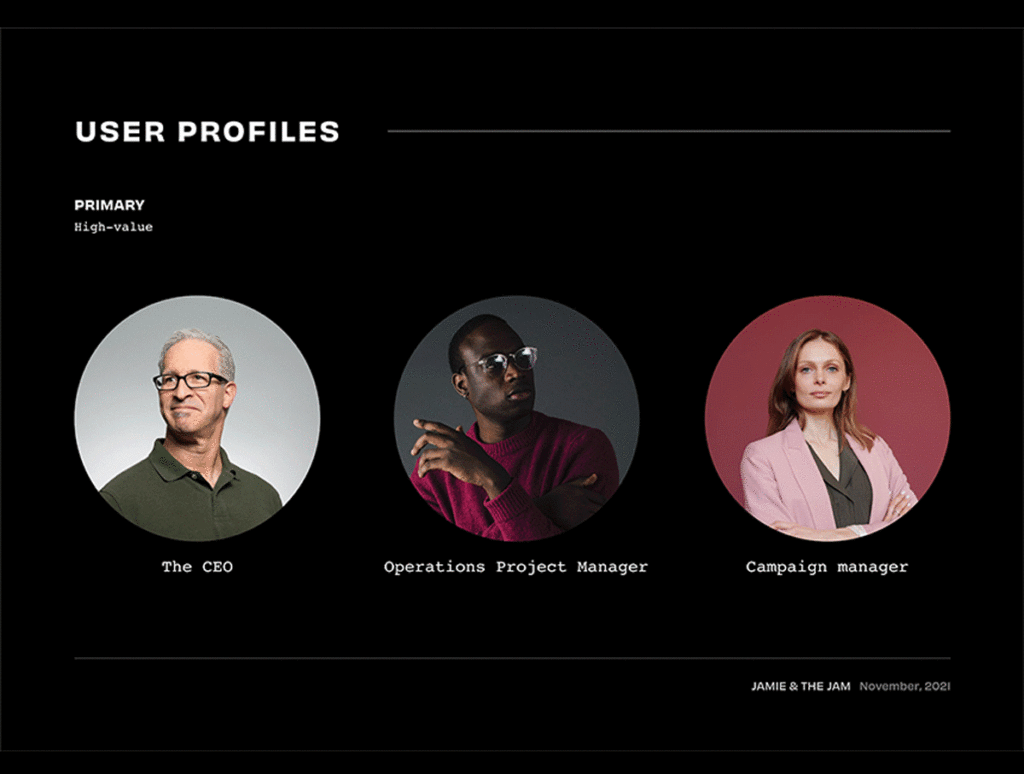
Understanding Your Target Audience
One of the most important parts of building a new website is understanding the preferences of the audience you’re targeting. You know what your ideal customer profiles (ICP) look like, but do you understand how they behave when interacting with websites online?