



AI knowledge assistants that answer from internal knowledge bases and data sources.

We design and build AI-powered knowledge assistants using a Retrieval-Augmented Generation (RAG) approach, so the assistant answers from approved internal sources and cites the source every time.

The enterprise-grade alternative to general-purpose AI

Schedule a consultation

A knowledge assistant built on a Retrieval-Augmented Generation (RAG) approach answers only from approved internal sources: documents, knowledge bases, product data, support content, technical libraries.

Every response is cited back to the original document which gives the business a verifiable, defensible AI layer to put in front of customers, prospects and internal teams, without the risk of a general-purpose chatbot inventing responses or drawing on sources it should not.

What we build with RAG

Retrieval-Augmented Generation is the architecture that makes AI safe and useful inside a business. The assistant retrieves relevant content from an indexed source library, then a language model generates a response grounded in that content with the  a back to the underlying document.  We build RAG-powered assistants in several forms:

100+ Partnerships

Customer-facing knowledge assistants

embedded on the website, guiding visitors through products, applications and detailed content

Customer support assistants

that resolve repetitive enquiries and hand over cleanly when a human is needed

Internal knowledge tools

that let employees query institutional knowledge, policies, specifications and process documentation on demand

Technical documentation assistants

for specialist users who need precise, cited answers from the source material

Sales enablement assistants

that give commercial teams instant answers from the product library, case content and pricing

Where the value shows up

The commercial outcomes of a well-built knowledge assistant vary by deployment, but tend to cluster around four things.

Putting Claude Fable 5 to work: what our development team found

Faster answers for customers, prospects and internal teams

Questions that used to require a call, an email, or a hunt through a document library get resolved in the browser, in seconds.
The knowledge that already exists inside the business becomes directly usable, rather than sitting locked in documents no one has time to read.

Better-qualified enquiries reaching the sales team

The assistant handles the education phase, answers the questions prospects have before they are ready to talk, and passes through the enquiries that genuinely warrant a human conversation. The sales team receives fewer, higher-quality leads, with richer context attached to each one.

Reduced load on customer support

Repetitive enquiries deflect cleanly at any hour and in any market.
Where a real handover to a human is needed, the assistant passes across the full conversation so the support team can resolve the issue without asking the customer to repeat themselves.
The commercial outcome is measured in deflection rate, average handle time and cost per ticket.

A verifiable AI layer the business can stand behind

Every response is drawn from approved internal content and cited back to source.
Legal, security and compliance can sign off on the assistant with confidence, because there is no black box and no risk of the model inventing an answer it cannot back up.

What's inside an AI knowledge assistant

We embrace a structured and sequential waterfall process, ensuring each phase is thoroughly planned, executed, and reviewed before moving to the next.

Secure document ingestion managed through the CMS

Ingestion can be handled through your existing CMS, whether that’s WordPress or otherwise, so content owners upload and manage documents in the tool they already use.

On publish, documents flow through a secure ingestion pipeline, are processed and indexed in the retrieval layer, and become available to the assistant.

Version control where it matters

Where content changes over time and version control matters, the assistant can be configured to answer from the current version, treat older versions as archival, and state on every citation which version an answer came from. 

Useful for policy documents, regulated content, product information, and anything else where the wrong version of an answer creates a real problem.

Responses that link back to the source

Every answer the assistant returns can link back to the underlying document, at the page level where practical, and can surface related products or content alongside the response with direct links.

Handling the reality of real-world documents

Chunking and retrieval can be tuned for mixed-content documentation, where key information sits in tables, images and diagrams as often as it does in the body copy. 

Detailed questions can resolve reliably against structured data, and visual content can be surfaced with its source document and page when a question depends on it.

Confident answers, or none

The assistant can be constrained to approved internal content, so it does not lean on external knowledge unless it has been told to.

Where a confident answer cannot be found, it can be set to say so plainly and offer a route through to the team rather than guess.

Session context

Follow-up questions within a session can build on prior context, so users do not have to repeat themselves.

Governance and access

Clear frameworks around data access, model usage and audit logging, with role-based permissions so different team members can be given access only to the areas they need.

Built to fit the existing tech stack

We are not tied to a single cloud provider, retrieval technology, or model vendor.

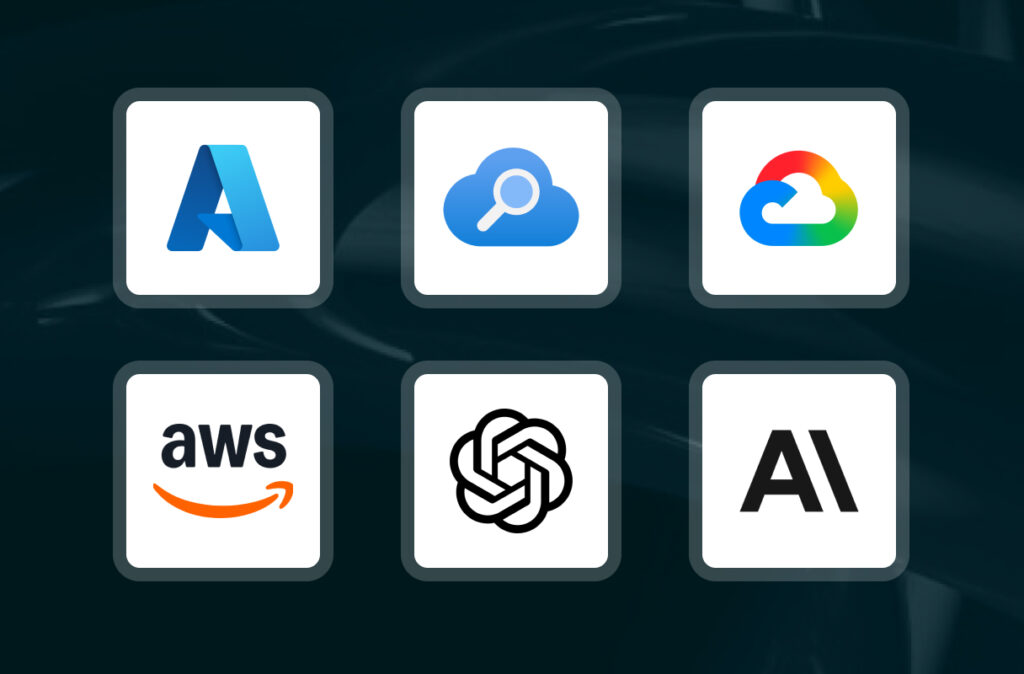
Depending on the existing tech stack, security posture and internal preferences, we build across Microsoft Azure (including Azure AI Search and Azure OpenAI), AWS, Google Cloud, and open-source retrieval frameworks.

The model layer supports OpenAI, Anthropic, Azure OpenAI, and open-weight models where those are the right fit.
SoBold AI services

AI can help you automate marketing workflows, streamline customer support systems and seamlessly connect data points to guide strategy and decision making.

Accelerate your business with automation and strategic AI integration.

View service

Practical AI training designed around how your business works.

View service

We work with our clients to make smarter use of AI across their workflows.

View service

We build bespoke platforms that consolidate your tools and work the way you need it to.

View service

AI knowledge assistant FAQs

Will Newland - SoBold founder

Get in touch with Will for more answers.

An AI knowledge assistant is a conversational interface, typically embedded on a website or internal system, that answers questions using internal documentation as its source of truth.

It’s built using a Retrieval-Augmented Generation (RAG) approach, which means every response is drawn from approved internal sources and cited so it can be verified.

It’s not a general-purpose chatbot connected to the open internet.

Text-based content, including product documentation, brochures, manuals, technical papers, knowledge base articles, whitepapers, policy documents and FAQs, is straightforward.

The more complex the documents – diagrams, plots and graphs, structured tables – the harder it is to get AI to understand them cleanly, and we work through the right chunking and retrieval approach for those as part of scoping.

In technical and support modes the assistant is constrained to approved internal content and will not lean on external knowledge.

Where a confident answer cannot be found, the assistant will say so plainly and offer a route through to the team rather than guess.

Every document carries control metadata at ingestion, including revision, issue date and status. Retrieval will filter to current documents by default.

Superseded revisions leave the active set immediately but remain available by direct link where they are still needed.

Every citation the assistant returns will state the revision and issue date, so users can see at a glance which issue an answer came from.

We build across Microsoft Azure, AWS, Google Cloud, and open-source retrieval frameworks, matched to the existing tech stack.

On the model side, we support OpenAI, Anthropic, Azure OpenAI, and open-weight models.

We are not tied to a single vendor.

Governance is built in from day one, including role-based permissions, audit logging, and clear separation between what’s public, what’s ingested and what stays behind the firewall.

We work directly with internal teams during scoping so the assistant meets the standards it needs to before delivery begins.

Yes. Content owners upload and manage documents through the CMS they already use. When a document is removed from the CMS, it will be removed from the assistant. The wider team never needs to touch the underlying infrastructure directly.

The client does.

There is no licensing lock-in at the application layer and no vendor dependencies that cannot be exited.

If the decision is made to bring the system in-house or move it to a different provider, the architecture supports that.

Work with our team to build and scale your bespoke requirements.

Once you submit the form one of our team will contact you to set up a meeting to clarify your requirements and build a quote.

Working with leading b2b clients

    Message sent

    Thanks for reaching out. We'll be in touch within one working day to confirm your call.