
AI
Design

How our design team actually works with AI

Written by
Laura Gray

Head of Design

Contents

Earlier this month, we sat down with Laura, our Head of Design, to talk through how the team’s process has changed and adapted over the past six months and how AI efficiencies have been integrated into each phase, improving our output and speed.

The same phases, run differently

Our design process has always moved through the same top-level stages: research and discovery, site architecture, mood boards, design, and prep for development.

Six months ago, each stage was a largely manual, two-way exercise; the team did the work, took it to the client, and iterated on feedback.

Those stages are all still there, however, the difference is that each one now carries its own loop of collaboration and auditing with AI: the team feeds in what they know, iterates against it, audits the output, and builds on the result before anything reaches the client.

Laura describes it as moving from a back-and-forth to an ecosystem, where every phase draws on everything the project has already learned.

The time has moved away from a more manual setup and towards a more automated process where decisions are able to be looped in to ensure our approach is entirely user and data backed. We’ve evolved from a manual workflow to an AI-enabled process that helps align our decisions with user research, making it easier to ensure each outcome is backup up with users insights and data.

How we approach our design work

When a project is won, our team typically sets it up as a project in Claude and feeds in all and every bit of information that the client has supplied, from briefs and meeting (internal and external) transcripts to background documents and existing research.

We use AI tools to then determine patterns across the target audience and competitor approaches, plus any gaps or discrepancies in the information provided. The output instantly provides information for a sharper conversation and a more useful research phase.

As the project goes on, the knowledge compounds, meaning by the time the team reaches wireframes, the project already holds the research, the client’s answers, and the reasoning behind every decision so far, which is exactly what the later phases feed on.

Working smarter

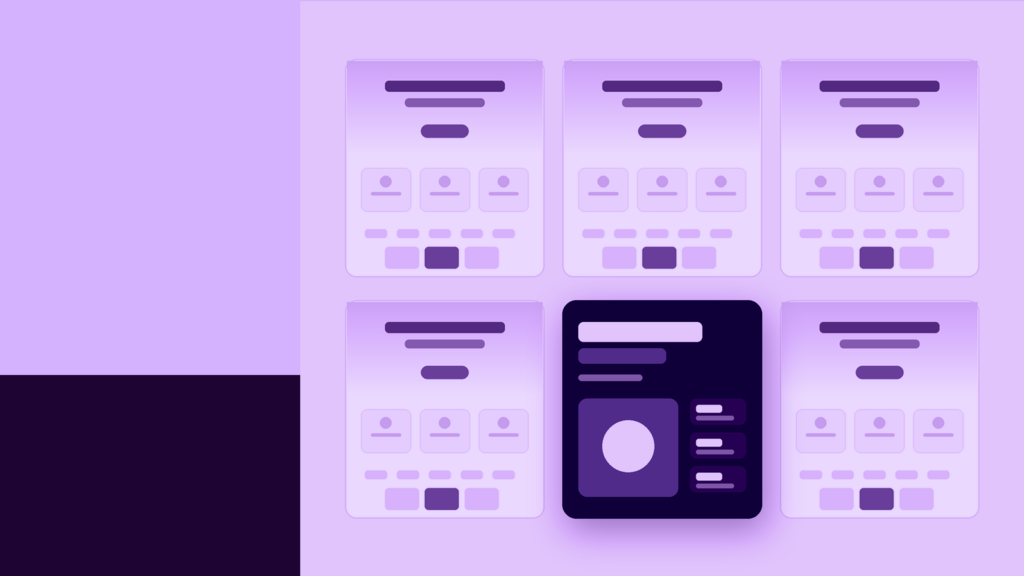
At the wireframe stage, we are able to focus on the important data driven decisions that matter to make sure all of the user journeys are as effective and efficient as possible and work with AI to audit the scope against the work we have produced.

At the UI stage, it shifts to ensuring our work has clear accessibility and interface consistency throughout and works as a quality assurance against all of our work.

“It’s not perfect. It needs reviewing, it needs auditing. The focus now able to be on the the important stuff, as opposed to the heavy manual tasks” – Laura, Head of Design

A junior designer trained on our processes

The team has also built what they affectionately call their ‘junior designer’: an internal agent trained on SoBold’s processes and values.

Alongside auditing design work, it reads project transcripts and past notes to check the team is being consistent, transparent with the client and on track against what was agreed.

UI, Figma and the design system

Our belief is that raw UI generation with AI isn’t there yet; however, what it can help with is working with and inside design systems.

Using Figma’s MCP server, our team connects AI to the design system. It’s able to flag where the system itself could be made more scalable and efficient for the development team.

Similarly, within Figma, the team uses Figma’s design agent, to rapidly prototype ideas directly on the canvas: select a component or frame, and ask for variations aligned with the design system without leaving the file.

Prep for development: writing for a reader that doesn’t fill in gaps

The handover of the designs from our design team to the development team has had one of the biggest shifts in effort.

Typically this is a heavy load manual task and whilst we are still typically spending the same amount of time on these efforts, where we are spending our time is the key difference.

We are able to automate some of the manual jobs and focus on making sure our efforts can be put into making sure we are setting up truly scalable design systems.

Same time, more quality

There are efficiency savings, but the point is what the time buys now.

The grunt work has largely gone, and the hours go into reviewing, auditing, and the thinking a client actually pays a design team for but the output is way, way better.

What comes next

A flood of AI-generated design is coming, and much of it will look the part without holding up in use.

The line we keep hearing across the industry is that volume is easy, and trust is hard, and trust gets built by designers who stay closely involved with clients and developers throughout a project.

“I think we’re going to start hearing less of ‘just do it with AI’ and more ‘what do you think?'” – Laura, Head of Design

Related news

News
AI
Design

How UI design has changed with AI tools

5 min read
News
AI
Development

Putting Claude Fable 5 to work: what our development team found

5 min read
News
Agency
AI
Design
Technical SEO

One website, two audiences: what we’re seeing in AI search right now

5 min read
News
AI
Development
Technical SEO

How to ensure your new website is optimised for search and LLMs

10 min read