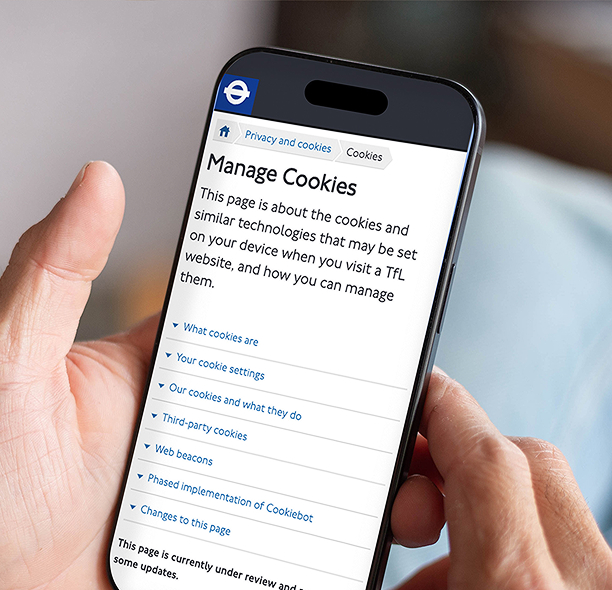
For organisations operating across multiple domains and bespoke data-driven platforms, Cookiebot implementation is an architectural challenge. Consent needs to be orchestrated across different technology stacks, regional regulatory frameworks, and third-party integrations, all while maintaining a coherent user experience.
Getting this right requires technical rigour that goes well beyond platform configuration.
Getting it wrong creates exposure that most organisations only discover under regulatory scrutiny.
Where standard implementations break down
The standard Cookiebot implementation path assumes a uniform technology stack, a single domain, and one regulatory jurisdiction. Enterprise data-driven platforms rarely operate under those conditions.
Large data-driven platforms and websites introduce complexity that generic implementations cannot handle:
- High-page-count sites where cookies behave differently across sections
- Multiple domains or subdomains requiring coordinated consent states
- Regional compliance requirements spanning GDPR, CCPA, PECR, and jurisdiction-specific frameworks
- Bespoke front ends where standard integrations break or behave unpredictably
- Third-party tags and marketing pixels that fire before consent is properly captured
Enterprise-grade implementation
Comprehensive cookie auditing
Before any configuration begins, a complete audit surfaces everything tracking users across the data-driven platform:
- Scanning all pages
- Identifying cookies set by third-party scripts
- Documenting where tags fire relative to consent state
- Testing behaviour across browsers, devices, and geographic regions
Many organisations discover cookies they didn’t know existed: legacy tracking scripts, abandoned A/B testing tools, or third-party widgets loading their own trackers, all of which need to be surfaced before any categorisation framework can be applied.
Correct categorisation and blocking
Cookie categorisation sounds simple until you encounter edge cases. Is a font loaded from Google Fonts a “necessary” cookie or a “statistics” cookie? What about a chat widget that also tracks behaviour? Where does a marketing pixel that provides analytics data belong?
These categorisation decisions determine what fires and when. Miscategorise a marketing cookie as necessary, and consent collection becomes meaningless.
Tag-level consent enforcement
Implementation specialists handle this by:
- Auditing how every tag is loaded (directly, via tag manager, via other scripts)
- Configuring blocking rules that actually prevent execution, not just hide elements
- Testing consent flows across all realistic user journeys
- Validating behaviour after consent is granted, denied, and withdrawn
Cross-domain and multi-region coordination
This coordination requires architectural planning that accounts for:
- How consent state is shared across domains
- Which regional frameworks apply based on user location vs. business location
- How to handle users who move between jurisdictions
- What happens when regulations conflict
The technical implementation and regulatory requirements need to be solved together to avoid compliance gaps that only surface during audits.
The implementation partner relationship
What separates capable partners from licence resellers:
Technical ownership, not just licence provision. The right partner takes responsibility for the compliance outcome. When something breaks, they fix it. When regulations change or your marketing team wants to add a new tracking pixel, they advise on adjustments and ensure correct implementation.
CMS-agnostic expertise. Large organisations rarely run uniform technology stacks. Your primary site might be enterprise WordPress while your careers portal runs on a different platform entirely, each with its own compliance requirements. Cookiebot issues are rarely about the CMS itself; they’re about how the site has been architected. Partners who only know one platform cannot support complex data-driven platforms.
Direct escalation paths. Capable partners have direct access to Cookiebot’s technical and partnership teams. Enterprise edge cases cannot always be solved with documentation and support tickets. Established reseller relationships mean faster resolution and access to bespoke configurations when standard approaches fall short.
Structured engagement models. Compliance work should integrate smoothly into existing delivery models: clear audit phases with flexible support arrangements, plus the ability to operate behind the scenes or client-facing depending on internal preferences.
Common implementation failures
Banner without blocking
This occurs when the banner is implemented as a UI element without connecting to actual tag blocking.
The organisation collects data without a valid consent basis, which structured auditing will surface immediately.
Incomplete scanning
Cookiebot’s automatic scanning works well for straightforward sites, but complex architectures with authenticated sections, dynamic content, or JavaScript-heavy pages require manual supplementation.
Category confusion
Implementation specialists research what each cookie does, trace undocumented ones to their source, and categorise based on function rather than convenience.
Consent state leakage
Users who withdraw consent should stop being tracked immediately, not on their next visit. These failures happen when consent state isn’t properly communicated to all tracking systems, or when server-side tracking operates independently of client-side consent.
Regional misconfiguration
Specialist partners build clear policies for edge cases and configure defaults that favour the strictest applicable regulation.
A structured implementation process
Phase 1: Audit and Discovery
- Complete cookie audit across all properties
- Documentation of current tracking behaviour
- Gap analysis against regulatory requirements
- Categorisation framework development
Phase 2: Technical Implementation
- Cookiebot configuration aligned to audit findings
- Tag manager integration with proper consent triggers
- Blocking rules for all non-essential cookies
- Cross-domain consent synchronisation where required
Phase 3: Validation and Testing
- Consent flow testing across all user journeys
- Regional behaviour verification
- Tag firing validation pre and post consent
- Browser and device compatibility testing
Phase 4: Documentation and Handover
- Complete documentation of implementation decisions
- Training for internal teams on maintenance
- Monitoring setup for ongoing compliance
- Change management process for new tracking requests
The entire process treats consent management as infrastructure that requires the same rigour as any other compliance function.
Most organisations with data-driven platforms find, when they look closely, that their current implementation falls short of genuine compliance, typically in areas that only become visible through structured auditing.
As a Platinum Certified Cookiebot Partner, SoBold has implemented compliant consent management across complex data-driven platforms including national infrastructure bodies and large public-facing organisations.
Working with a specialist agency partner who understands both the technical and regulatory dimensions ensures that compliance is genuine, sustainable, and integrated into how your data-driven platform operates.
For a compliance review of your current implementation, or to plan a Cookiebot deployment across a complex data-driven platform, get in touch to discuss your requirements.